Rhizobium Inoculants (Bio Fertilizer): A Natural Nitrogen Solution for Sustainable Agriculture
Rhizobium Inoculants are among the most important biofertilizers used in agriculture for improving nitrogen availability naturally. These beneficial bacteria form a symbiotic relationship with leguminous crops and help fix atmospheric nitrogen into forms that plants can easily utilize.
As farmers increasingly adopt organic and sustainable farming practices, Rhizobium biofertilizers are becoming a preferred solution for reducing chemical fertilizer dependency while improving soil fertility and crop productivity.
At Gujarat Organic Fertilizer, we provide high-quality biofertilizers and organic agricultural solutions that support healthy crops, fertile soil, and environmentally friendly farming.
What are Rhizobium Inoculants?
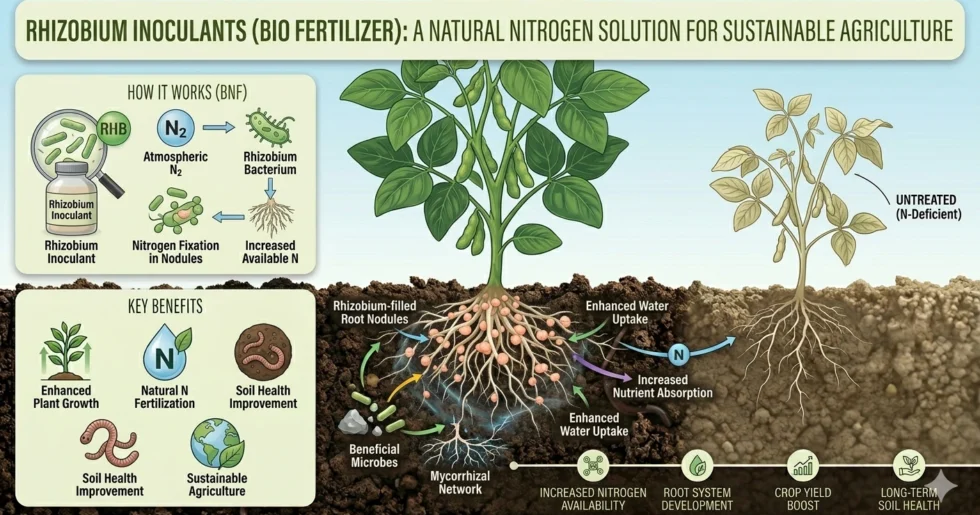
Rhizobium Inoculants are microbial biofertilizers containing beneficial Rhizobium bacteria. These bacteria infect the roots of leguminous plants and form root nodules where atmospheric nitrogen is converted into plant-available nitrogen.
This natural nitrogen fixation process provides essential nutrients to crops and improves soil fertility.
Rhizobium bacteria help crops receive nitrogen naturally while improving soil health.
Rhizobium inoculants are highly effective for legume crops such as pulses, groundnut, soybean, and other nitrogen-fixing crops.
Importance of Nitrogen in Agriculture
Nitrogen is one of the most essential nutrients required for healthy plant growth and crop productivity.
Functions of Nitrogen in Plants:
Promotes leaf growth
Supports chlorophyll formation
Improves photosynthesis
Enhances protein synthesis
Encourages healthy plant development
Increases crop yield
Nitrogen deficiency in crops can cause:
Yellowing of leaves
Weak plant growth
Reduced yield
Poor crop quality
Nitrogen is essential for healthy green growth and higher agricultural productivity.
How Rhizobium Inoculants Work
Rhizobium bacteria enter the roots of legume crops and form nodules on the root system.
Inside these nodules, the bacteria:
Fix atmospheric nitrogen
Convert nitrogen into plant-usable forms
Supply nitrogen directly to the plant
Improve soil fertility for future crops
This symbiotic relationship benefits both the crop and the soil.
Benefits of Rhizobium Inoculants
1. Natural Nitrogen Fixation
Rhizobium converts atmospheric nitrogen into forms easily absorbed by plants.
2. Reduces Chemical Fertilizer Dependency
It helps reduce the requirement for chemical nitrogen fertilizers.
At Gujarat Organic Fertilizer, we provide premium-quality biofertilizers and organic agricultural solutions designed to improve crop productivity and soil fertility naturally.
Our products focus on:
Sustainable farming practices
Better nutrient management
Soil fertility improvement
Eco-friendly agricultural solutions
Long-term agricultural productivity
We are committed to helping farmers achieve healthier soil and better harvests naturally.
Conclusion
Rhizobium Inoculants are highly effective biofertilizers that naturally improve nitrogen availability, enhance soil fertility, and support healthy crop growth. By reducing dependency on chemical fertilizers and improving long-term soil productivity, Rhizobium plays an important role in sustainable agriculture.
As farmers continue adopting eco-friendly farming methods, Rhizobium biofertilizers are becoming essential for integrated nutrient management.
For trusted biofertilizer and organic farming solutions, choose Gujarat Organic Fertilizer.
Frequently Asked Questions (FAQs)
What are Rhizobium Inoculants?
Rhizobium Inoculants are biofertilizers containing beneficial bacteria that fix atmospheric nitrogen in legume crops.
What are the benefits of Rhizobium biofertilizers?
They improve nitrogen availability, soil fertility, crop growth, and reduce chemical fertilizer dependency.
Which crops can benefit from Rhizobium?
Groundnut, soybean, chickpea, pulses, peas, and other legume crops benefit from Rhizobium inoculants.
Can Rhizobium reduce chemical fertilizer usage?
Yes, Rhizobium helps reduce dependency on chemical nitrogen fertilizers.
Is Rhizobium suitable for organic farming?
Yes, Rhizobium is widely used in organic and sustainable farming systems.